Planning a trip to Vietnam in 2026? One of the first questions many travelers ask is whether they need a visa at all.
Depending on your nationality, you may qualify for Vietnam visa exemption, allowing you to enter without applying for a visa. Others will need to apply for a Vietnam eVisa, the country’s convenient online visa system.
Understanding the difference between these two options can save you time, money, and unnecessary stress before your trip.
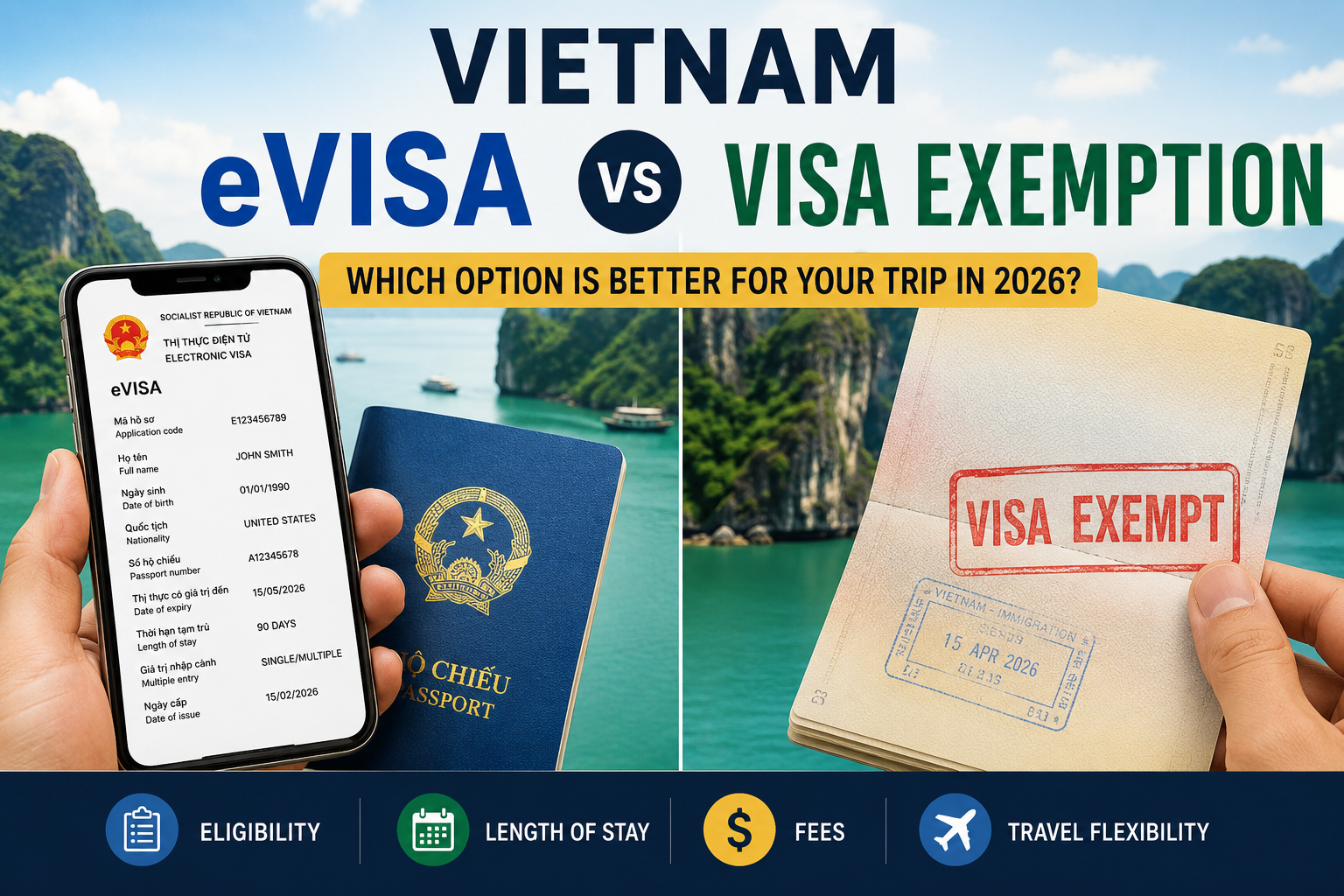
In this guide, we’ll compare Vietnam eVisa vs Visa Exemption, including eligibility, length of stay, costs, advantages, disadvantages, and which option is best for different travelers.
Quick Answer: Vietnam eVisa vs Visa Exemption
The main difference is simple:
- Visa Exemption allows eligible travelers to enter Vietnam without applying for a visa.
- Vietnam eVisa requires an online application and approval before travel.
If your nationality qualifies for visa-free entry and your stay is short enough, visa exemption is usually the easiest option.
However, travelers planning longer stays, multiple entries, or those from countries not eligible for visa exemption will generally need an eVisa.
What Is Vietnam Visa Exemption?
Vietnam visa exemption allows citizens of certain countries to enter Vietnam without obtaining a visa beforehand.
Travelers simply present their passport at immigration and receive permission to enter based on current visa-free regulations.
The exact duration depends on nationality and current government policies.
Benefits of Visa Exemption
- No visa application required
- No government visa fee
- Faster preparation before travel
- Ideal for short vacations
Limitations
- Available only to eligible nationalities
- Limited duration of stay
- Extensions may be difficult
- Rules can change over time
What Is a Vietnam eVisa?
The Vietnam eVisa is an electronic visa that travelers apply for online before arrival.
After approval, travelers receive an electronic document allowing entry into Vietnam through approved airports, land borders, and seaports.
The eVisa system has become the preferred option for millions of international visitors because of its convenience and flexibility.
Benefits of an eVisa
- Online application process
- Available to many nationalities
- Up to 90-day validity
- Single-entry or multiple-entry options
- Accepted at numerous border crossings
Limitations
- Requires application before travel
- Government fee applies
- Processing time required
- Errors can cause delays
Vietnam eVisa vs Visa Exemption Comparison
| Feature | Vietnam eVisa | Visa Exemption |
|---|---|---|
| Application Required | Yes | No |
| Government Fee | Yes | No |
| Available to All Nationalities | No | No |
| Maximum Stay | Up to 90 days | Depends on nationality |
| Multiple Entry Option | Available | Usually not |
| Processing Time | Several days | Immediate |
| Flexibility | High | Moderate |
| Best For | Longer trips | Short vacations |
Who Can Use Vietnam Visa Exemption?
Visa exemption is available only for specific nationalities.
Since regulations may change, travelers should always verify the latest rules before departure.
Visa exemption is often ideal for:
- Short holidays
- Business trips under the allowed duration
- Travelers visiting Vietnam as part of a regional Southeast Asia itinerary
If your trip exceeds the permitted visa-free stay, you may need an eVisa instead.
Who Should Apply for a Vietnam eVisa?
An eVisa is usually the better option if:
- Your nationality is not eligible for visa exemption
- You plan to stay longer
- You need multiple entries
- You want more flexibility during your trip
- You are visiting several countries and returning to Vietnam
Many travelers choose an eVisa even when visa exemption is available because they prefer a longer permitted stay.
Vietnam eVisa Fees in 2026
Current government fees are generally:
| Visa Type | Fee |
| Single Entry eVisa | USD 25 |
| Multiple Entry eVisa | USD 50 |
Government fees are typically non-refundable even if an application contains errors.
For this reason, applicants should review all information carefully before submission.
Which Option Is Better for Tourists?
For most tourists, the answer depends on trip length.
Choose Visa Exemption If:
- You qualify for visa-free entry
- Your trip is shorter than the allowed stay
- You want the simplest travel preparation
- You are visiting Vietnam for a quick holiday
Choose an eVisa If:
- You need more time in Vietnam
- You want multiple entries
- Your nationality is not visa-exempt
- You prefer having immigration approval before departure
Common Mistakes Travelers Make
Assuming Visa Exemption Applies to Everyone
Many travelers mistakenly believe all visitors can enter Vietnam without a visa.
Always verify eligibility before booking flights.
Booking Flights Before Checking Requirements
Entry rules differ by nationality.
Confirm your visa requirements before making non-refundable travel arrangements.
Applying Too Late
While eVisas are generally processed quickly, travelers should allow extra time for unexpected delays.
Choosing the Wrong Entry Point
Ensure your airport, land border, or seaport accepts eVisa entry if you plan to use one.
How Goreise Can Help
Navigating visa regulations can sometimes be confusing, especially when requirements change.
Goreise helps travelers understand:
- Vietnam eVisa requirements
- Entry regulations
- Visa application guidance
- Travel planning before arrival
Whether you’re planning a Mekong Delta tour, a Ho Chi Minh City visit, or a longer Vietnam adventure, having the correct immigration documents is the first step toward a smooth trip.
Frequently Asked Questions
Is visa exemption better than an eVisa?
If you qualify and your trip is short, visa exemption is usually the easiest option. For longer stays and greater flexibility, an eVisa may be better.
Can I enter Vietnam multiple times with visa exemption?
This depends on your nationality and current regulations. Many visa exemption programs do not offer the same flexibility as a multiple-entry eVisa.
How long can I stay in Vietnam without a visa?
The permitted stay varies depending on nationality and government policy.
Is the Vietnam eVisa difficult to obtain?
No. Most travelers complete the application online by submitting passport information, a photo, and payment.
Can I convert visa exemption into an eVisa after arrival?
Travelers should verify current regulations before travel. In many cases, planning the correct entry option before arrival is recommended.
Final Verdict
When comparing Vietnam eVisa vs Visa Exemption, there is no single answer that fits everyone.
If your nationality qualifies and your trip is short, visa exemption is often the fastest and simplest solution.
However, if you need a longer stay, multiple entries, or greater flexibility, the Vietnam eVisa is usually the better choice.
Before booking your flights, take a few minutes to confirm your eligibility and choose the option that best matches your travel plans. A little preparation now can make your arrival in Vietnam much smoother and more enjoyable.