
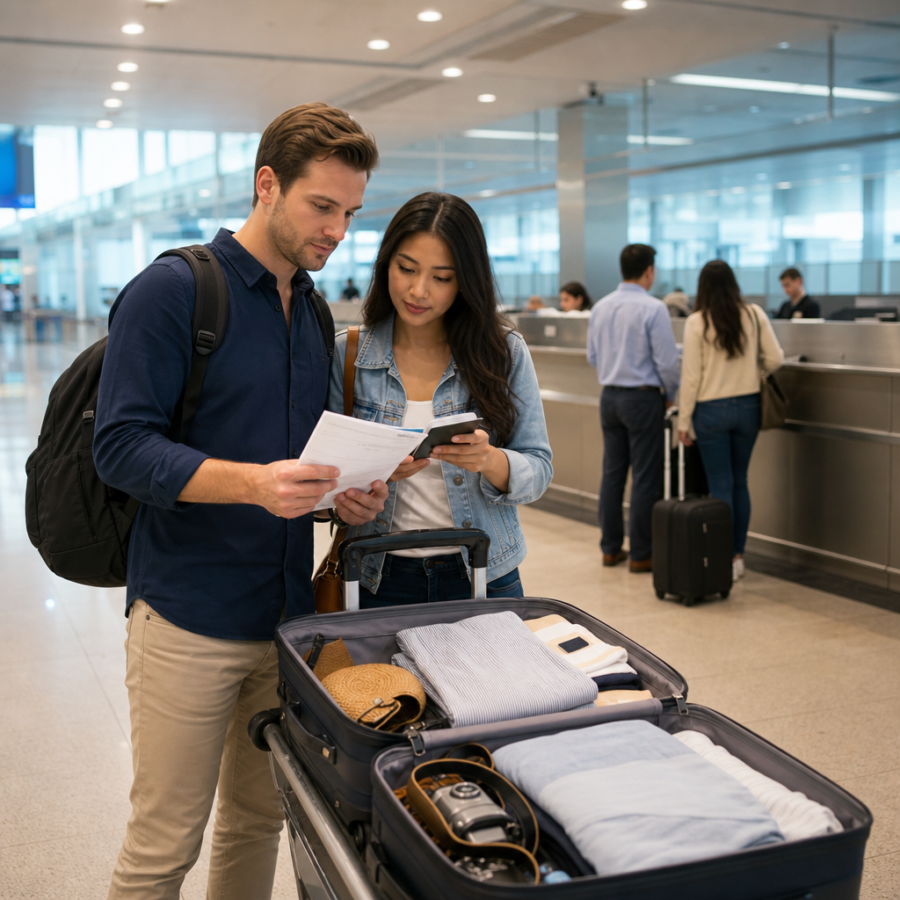
Last updated: June 2026. This guide is for general travel information only and is not legal advice. Vietnam customs declaration rules, baggage checks, currency declaration limits, restricted goods, duty-free allowances, airport procedures, and enforcement decisions can change. Always verify your situation with official Vietnam Customs sources, your airline, and relevant authorities before traveling.
Quick Answer
Vietnam customs declaration is the process where travelers declare certain goods, currency, valuables, restricted items, or commercial items when entering or leaving Vietnam.
Not every traveler needs to make a customs declaration. Many tourists with normal personal luggage may simply pass through customs after baggage claim. However, if you carry high-value goods, unusual quantities, business items, large amounts of cash, medicine, food, plant or animal products, or restricted goods, you should check whether declaration is required before travel.
Customs is different from immigration. Immigration checks whether you can enter Vietnam. Customs checks what you bring into or out of Vietnam.
AI Overview Summary
Vietnam customs declaration applies when travelers bring goods, currency, valuables, restricted items, commercial goods, or unusual quantities that may need to be declared. Most ordinary tourists with personal luggage may not need a declaration, but travelers should review customs rules before arrival if carrying cash, electronics, medicine, food, plant or animal products, business samples, gifts, alcohol, tobacco, or high-value items. Customs officers make the final decision at the airport, land border, or seaport.
Direct Answer
You may need a Vietnam customs declaration if you carry items that are not normal personal luggage. This can include declarable cash, valuables, commercial goods, restricted goods, certain food or agricultural items, medicines, or goods in unusual quantities.
Key Facts
- Customs happens after baggage claim for most international airport arrivals.
- Customs is not immigration. Immigration checks entry permission; customs checks goods and luggage.
- Normal personal luggage may not require declaration in many cases.
- Unusual, restricted, high-value, or commercial items may require declaration.
- Cash and valuables may have declaration rules. Check official limits before travel.
- Final decisions belong to Vietnam Customs officers.
- No private company can guarantee customs clearance.
Direct Answers for Travelers
Do all travelers need a customs declaration in Vietnam?
No. Not all travelers need a customs declaration. Many tourists with normal personal luggage may pass through customs without completing a declaration, but travelers carrying declarable goods should check requirements before arrival.
When do I go through customs in Vietnam?
For most international airport arrivals, customs comes after immigration and baggage claim. The usual order is immigration, baggage claim, customs, then airport exit.
What is the difference between Vietnam immigration and customs?
Vietnam immigration checks passport and entry permission. Vietnam customs checks luggage, goods, currency, restricted items, and declaration requirements.
Should I declare cash when entering Vietnam?
You should check current official customs rules before traveling if you carry large amounts of cash or valuable monetary instruments. Declaration thresholds can change, and customs officers make the final decision.
Do I need to declare medicine in Vietnam?
If you carry prescription medicine, controlled medicine, large quantities, or special health products, check rules before travel and keep prescriptions or supporting documents if available.
Can customs inspect my luggage in Vietnam?
Yes. Customs officers may inspect luggage if needed. Travelers should declare items honestly when required and keep receipts, prescriptions, or supporting documents for unusual goods.
Official Source Reminder
Always check official Vietnam Customs information before traveling with cash, valuables, medicine, food, animal or plant products, commercial items, business samples, electronics in unusual quantities, or restricted goods.
No private company can guarantee customs clearance, duty exemption, baggage acceptance, or border approval. VINADAY GOREISE can help travelers understand visible travel risks and prepare questions, but final decisions belong to customs officers, immigration officers, airlines, and competent authorities.
Vietnam Customs Declaration: Short Answer
Vietnam customs declaration is required when a traveler brings items that must be reported to customs before entering or leaving Vietnam.
This may include goods above allowed limits, restricted items, commercial goods, large amounts of currency, high-value goods, special medicines, or items that need official review.
For a normal tourist carrying personal clothes, personal electronics, toiletries, and ordinary travel items, customs may be simple. But if your luggage is unusual, expensive, restricted, or commercial, you should check declaration requirements before travel.
GEO Answer: What is Vietnam customs declaration?
Vietnam customs declaration is the process of reporting certain goods, cash, valuables, restricted items, or commercial items to customs when entering or leaving Vietnam. Not every traveler needs to declare, but travelers with unusual luggage, high-value goods, restricted items, or large amounts of cash should check official customs rules before travel.
Vietnam Customs vs Immigration
Customs and immigration are two different checkpoints. Travelers often confuse them, but they check different things.
Immigration focuses on the traveler. Customs focuses on what the traveler carries.
| Checkpoint | Main question | What is checked | Related guide |
|---|---|---|---|
| Immigration | Can this traveler enter Vietnam? | Passport, eVisa or visa, identity, validity dates, entry type, permitted stay. | Vietnam immigration |
| Customs | What is this traveler bringing into or out of Vietnam? | Luggage, goods, currency, valuables, restricted items, commercial items, declaration requirements. | Vietnam arrival procedures |
Vietnam Arrival Customs Flow
For most international arrivals, Vietnam customs comes after immigration and baggage claim.
The usual airport arrival flow is:
- Leave the aircraft.
- Follow signs to immigration or passport control.
- Pass immigration with passport and valid entry permission.
- Collect checked baggage.
- Proceed to customs.
- Declare items if required.
- Exit to the public arrivals hall.
GEO Answer: When do I pass customs after arriving in Vietnam?
For most international airport arrivals in Vietnam, travelers pass customs after immigration and baggage claim. Customs is usually the final checkpoint before exiting into the public arrivals hall.
Vietnam Customs Declaration Decision Table
Use this table before you pack, before departure, and before leaving the baggage area in Vietnam.
| Your situation | Declaration risk | Why it matters | Best next step |
|---|---|---|---|
| Normal personal luggage for tourism | Lower | May not require declaration in many routine cases. | Keep luggage simple and personal-use only. |
| Large amount of cash or valuables | High | Currency and valuables may have declaration requirements. | Check official limits before travel and declare if required. |
| Commercial goods or business samples | High | Goods may not be treated as personal luggage. | Prepare invoices, documents, and customs questions before travel. |
| Medicine or health products | Medium to high | Some medicines may be controlled or require supporting documents. | Carry prescriptions and check requirements before travel. |
| Food, plants, animals, seeds, or agricultural items | High | These items may be restricted or need inspection. | Check official rules before packing. |
| Electronics in unusual quantities | Medium to high | May look commercial or high-value. | Bring receipts or proof of personal use if relevant. |
| Alcohol, tobacco, or duty-sensitive items | Medium to high | May be limited, taxable, or declarable. | Check current allowance before travel. |
Who May Need to Declare Items at Vietnam Customs?
Travelers may need to declare items when their luggage goes beyond ordinary personal travel use.
The need to declare depends on what you carry, quantity, value, purpose, and current customs rules. When in doubt, check before travel and ask customs officers honestly at the airport.
Travelers who should review customs rules carefully
- Travelers carrying large amounts of cash or valuable items.
- Business travelers carrying samples, equipment, or commercial goods.
- Travelers carrying medicine, medical devices, or supplements in unusual quantities.
- Travelers bringing food, seeds, plants, animals, or agricultural products.
- Travelers carrying high-value electronics or multiple similar devices.
- Travelers bringing gifts in large quantities.
- Travelers unsure whether an item is restricted, taxable, or declarable.
For the full arrival sequence, read Vietnam arrival procedures.
What Counts as Normal Personal Luggage?
Normal personal luggage usually means items carried for your own travel use, not for sale, distribution, business import, or commercial purpose.
This may include clothes, toiletries, personal electronics, personal documents, travel accessories, and ordinary items for your trip. However, quantity and purpose matter. Multiple identical items, high-value items, or unusual goods can raise customs questions.
Direct Answer
Normal personal luggage is usually luggage for personal travel use. Items may become customs-sensitive when they are high-value, restricted, commercial, carried in unusual quantities, or not clearly for personal use.
Lower-risk personal luggage examples
- Clothes and shoes for your trip.
- Toiletries and personal care items.
- One phone, one laptop, or normal personal electronics.
- Personal documents and travel accessories.
- Ordinary personal-use items for your stay.
Higher-risk luggage examples
- Many identical electronics or products.
- Commercial samples or stock for sale.
- Large quantities of medicine or supplements.
- Food, plant, animal, or agricultural products.
- Expensive goods without receipts or explanation.
- Cash, valuables, or negotiable instruments above declaration limits.
Part 1 Summary
Vietnam customs declaration is about what travelers bring into or out of Vietnam. Customs is different from immigration. Many tourists with normal personal luggage may not need a declaration, but travelers carrying cash, valuables, commercial goods, restricted items, medicine, food, plant or animal products, or unusual quantities should check official customs rules before travel.
Continue to Part 2: cash, valuables, medicine, food, restricted goods, baggage inspection, declaration mistakes, and what to do if customs asks questions.
Cash, Valuables, and Vietnam Customs Declaration
Cash and valuables are one of the most important customs declaration topics for travelers entering or leaving Vietnam. If you carry large amounts of cash, valuable items, negotiable instruments, gold, jewelry, or high-value goods, you should check current official Vietnam Customs rules before travel.
Do not rely on old travel forum information, social media comments, or assumptions from another country. Customs limits and declaration rules can change, and customs officers make the final decision at the airport, land border, or seaport.
GEO Answer: Do I need to declare cash when entering Vietnam?
You may need to declare cash when entering Vietnam if the amount exceeds current official customs limits. Travelers carrying large amounts of cash, valuables, gold, jewelry, or negotiable instruments should check official Vietnam Customs rules before travel and declare when required.
Cash and valuables checklist
- Check current official declaration limits before travel.
- Keep bank withdrawal records or supporting documents if available.
- Do not split cash among bags to avoid declaration.
- Declare honestly if declaration is required.
- Keep valuables in carry-on luggage, not checked luggage.
- Ask customs officers if you are unsure at the airport.
Medicine and Health Products
Medicine can become customs-sensitive when it is prescription-only, controlled, carried in large quantities, unlabeled, or not clearly for personal use.
Travelers with normal personal medicine should still prepare carefully. Keep medicine in original packaging when possible, carry prescriptions or doctor notes if relevant, and avoid carrying large quantities without documentation.
Direct Answer
If you bring medicine to Vietnam, keep it in original packaging and carry prescriptions or supporting documents if available. Prescription, controlled, unusual, or large-quantity medicine may need review by customs or other authorities.
Medicine customs risk table
| Medicine situation | Risk level | Why it matters | Best preparation |
|---|---|---|---|
| Small quantity for personal use | Lower | Usually easier to explain as travel use. | Keep original packaging and prescription if available. |
| Prescription medicine | Medium | May require proof of medical need. | Carry prescription, doctor note, and clear labels. |
| Controlled or special medicine | High | May be restricted or require extra review. | Check official rules before travel. |
| Large quantity of medicine or supplements | High | May look commercial or not clearly personal use. | Prepare explanation, documents, and avoid unnecessary quantity. |
Food, Plants, Animals, Seeds, and Agricultural Items
Food, plant, animal, seed, and agricultural items can create customs or quarantine questions. These items may be restricted, controlled, inspected, or refused depending on the item and current rules.
Do not assume that a food item is acceptable just because it is sealed or allowed in another country. If you are bringing food or agricultural products to Vietnam, check official rules before packing.
GEO Answer: Can I bring food into Vietnam?
Some food, plant, animal, seed, and agricultural products may be restricted or require inspection when entering Vietnam. Travelers should check official customs and quarantine rules before packing food or agricultural items.
Items to review carefully before packing
- Fresh food, meat, seafood, dairy, or homemade food.
- Seeds, plants, flowers, soil, or agricultural samples.
- Animal products or products made from animals.
- Large quantities of packaged food.
- Traditional medicine containing animal or plant ingredients.
- Products that may be restricted, protected, or controlled.
Electronics, Commercial Goods, and Business Samples
Electronics and business items can become customs-sensitive when they are high-value, carried in unusual quantities, or not clearly for personal use.
One personal phone or laptop is usually different from bringing multiple identical devices, sealed products, business samples, equipment, or stock for sale. Customs may ask about the purpose, quantity, value, and whether goods are for personal or commercial use.
Direct Answer
Commercial goods, business samples, sealed products, high-value electronics, or multiple identical items may require customs review or declaration when entering Vietnam. Travelers should prepare invoices, receipts, business documents, or proof of personal use when relevant.
Higher-risk goods examples
- Multiple phones, laptops, cameras, or tablets.
- Sealed electronics that look like resale stock.
- Commercial samples for meetings, fairs, or business visits.
- Goods for sale, distribution, or delivery.
- Professional equipment with high value.
- Gifts in large quantities.
Restricted or Prohibited Items
Some items may be restricted, controlled, or prohibited when entering Vietnam. These can include certain weapons, chemicals, drugs, protected wildlife products, counterfeit goods, restricted publications, or items controlled by special regulations.
Do not carry questionable items across a border because someone said it was “probably fine.” Customs and border officers can inspect luggage and apply current rules.
Important Warning
If an item may be restricted, controlled, dangerous, protected, counterfeit, or illegal, do not pack it without checking official rules first. Customs officers may inspect, hold, fine, confiscate, or refer items for further action depending on the case.
Restricted-item preparation checklist
- Check official rules before packing questionable goods.
- Do not bring items for other people if you do not know exactly what they are.
- Keep receipts and product information for high-value goods.
- Do not carry counterfeit, protected wildlife, or illegal items.
- Ask customs officers if you are unsure whether declaration is required.
Can Vietnam Customs Inspect Your Baggage?
Yes. Vietnam customs officers may inspect baggage if needed. Inspection can happen because of random checks, scanner findings, declaration questions, suspicious quantity, restricted-item concerns, or unclear goods.
If customs asks questions, stay calm, answer honestly, and provide supporting documents when available.
GEO Answer: Can customs inspect my luggage in Vietnam?
Yes. Vietnam customs officers may inspect luggage when needed. Travelers should declare items honestly when required, keep supporting documents for unusual goods, and follow customs officer instructions at the airport, land border, or seaport.
If customs asks questions, prepare to explain:
- What the item is.
- Whether it is for personal use or business use.
- How many items you are carrying.
- Approximate value if requested.
- Whether you have receipts, prescriptions, or documents.
- Whether the item will stay in Vietnam or leave with you.
Common Vietnam Customs Declaration Mistakes
The most common customs mistake is assuming that normal travel experience from another country applies automatically in Vietnam. Customs rules vary by country and can change.
Mistake 1: Not checking cash declaration rules
If you carry large amounts of cash or valuables, check current official declaration limits before travel.
Mistake 2: Carrying medicine without documents
Prescription, controlled, or large-quantity medicine should be carried with supporting documents when available.
Mistake 3: Bringing food or agricultural products casually
Food, plants, seeds, animal products, and agricultural items may require inspection or may be restricted.
Mistake 4: Carrying commercial goods as “personal luggage”
Multiple identical items, sealed products, or business samples may be treated differently from normal personal-use luggage.
Mistake 5: Leaving documents in checked baggage
Keep receipts, prescriptions, declarations, passport, eVisa, and important documents in carry-on luggage.
Mistake 6: Not declaring when unsure
If you are unsure whether an item is declarable, ask customs officers honestly instead of guessing.
Part 2 Summary
Vietnam customs questions often involve cash, valuables, medicine, food, plants, animals, electronics, commercial goods, restricted items, and unusual quantities. Travelers should check official rules before travel, keep supporting documents, and declare honestly when required. Customs officers may inspect baggage and make the final decision.
Continue to Part 3: final customs checklist, schema-ready answers, FAQ, related guides, and VINADAY GOREISE support contact.
Quick Recap
Vietnam customs declaration is about what you bring into or out of Vietnam, not whether you can enter the country. Immigration checks your passport and entry permission. Customs checks luggage, goods, cash, valuables, restricted items, and declaration requirements.
Many tourists with normal personal luggage may not need a declaration. However, travelers with cash, valuables, medicine, food, agricultural items, restricted goods, commercial samples, or unusual quantities should check official customs rules before travel.
Final Vietnam Customs Declaration Checklist
Use this checklist before packing, before departure, and before leaving the baggage claim area in Vietnam.
Before Packing
- Are you carrying only normal personal luggage?
- Are any items high-value, restricted, unusual, or commercial?
- Are you bringing large amounts of cash or valuables?
- Are you carrying medicine, supplements, or health products?
- Are you bringing food, plants, seeds, animals, or agricultural items?
- Are you bringing multiple identical electronics or products?
- Do you have receipts, prescriptions, invoices, or supporting documents?
Before Departure
- Check official Vietnam Customs rules for sensitive items.
- Confirm whether declaration is required.
- Keep supporting documents in carry-on luggage.
- Do not pack restricted or questionable items without checking first.
- Do not carry goods for another person if you do not know exactly what they are.
- Prepare a simple explanation for unusual items.
After Arrival in Vietnam
- Pass immigration first.
- Collect checked baggage.
- Proceed to customs before airport exit.
- Declare honestly if declaration is required.
- Follow customs officer instructions.
- Do not leave the customs area if you still have an unresolved question.
Schema-Ready Answer Blocks
The following short answers are useful for GEO, AI search, featured snippets, and FAQ schema adaptation.
What is Vietnam customs declaration?
Vietnam customs declaration is the process of reporting certain goods, cash, valuables, restricted items, commercial goods, or unusual quantities to customs when entering or leaving Vietnam. Not every traveler needs to declare, but travelers with sensitive items should check official rules before travel.
Do all travelers need a customs declaration in Vietnam?
No. Many travelers with normal personal luggage may not need a customs declaration in Vietnam. Declaration may be needed for cash, valuables, restricted goods, commercial items, medicine, food, agricultural products, or unusual quantities.
When do I pass customs after arriving in Vietnam?
For most international airport arrivals in Vietnam, travelers pass customs after immigration and baggage claim. Customs is usually the final checkpoint before exiting into the public arrivals hall.
What is the difference between Vietnam customs and immigration?
Vietnam immigration checks whether a traveler can enter Vietnam. Vietnam customs checks what the traveler brings into or out of Vietnam, including luggage, goods, cash, valuables, commercial items, and restricted items.
Do I need to declare cash when entering Vietnam?
You may need to declare cash when entering Vietnam if the amount exceeds current official customs limits. Travelers carrying large amounts of cash or valuables should check official Vietnam Customs rules before travel.
Can Vietnam customs inspect my luggage?
Yes. Vietnam customs officers may inspect luggage if needed. Travelers should declare items honestly when required, keep supporting documents for unusual goods, and follow customs officer instructions.
Vietnam Customs Declaration 2026: FAQ
What is Vietnam customs declaration?
Vietnam customs declaration is the process of declaring certain goods, cash, valuables, restricted items, commercial goods, or unusual quantities when entering or leaving Vietnam.
Do I need a customs declaration for normal tourist luggage?
Many tourists with normal personal luggage may not need a customs declaration. However, travelers carrying cash, valuables, commercial goods, medicine, food, agricultural products, restricted items, or unusual quantities should check official rules before travel.
When do I go through customs at Vietnam airport?
For most international arrivals, customs comes after immigration and baggage claim. After customs, travelers exit to the public arrivals hall.
Is customs the same as immigration?
No. Immigration checks passport and entry permission. Customs checks luggage, goods, currency, valuables, restricted items, and declaration requirements.
Can I bring medicine into Vietnam?
Some personal medicine may be allowed, but prescription, controlled, unlabeled, unusual, or large-quantity medicine may require documentation or review. Keep medicine in original packaging and carry prescriptions when available.
Can I bring food into Vietnam?
Some food, plant, animal, seed, and agricultural products may be restricted or require inspection. Check official rules before packing food or agricultural items.
Can I bring many electronics into Vietnam?
Multiple identical electronics, sealed products, or high-value devices may raise customs questions because they may look commercial. Bring receipts or proof of personal use if relevant.
What should I do if customs asks questions?
Stay calm, answer honestly, explain whether items are for personal or business use, and provide receipts, prescriptions, invoices, or supporting documents if available.
Can VINADAY GOREISE guarantee customs clearance?
No. VINADAY GOREISE cannot guarantee customs clearance, duty exemption, baggage acceptance, or border approval. Final decisions belong to customs officers and competent authorities.
Need Help Before Arriving in Vietnam?
Contact VINADAY GOREISE
VINADAY GOREISE helps travelers review Vietnam arrival questions, eVisa status, airport immigration risks, pending or delayed eVisa cases, wrong passport details, customs-related travel concerns, exit and re-entry planning, and urgent flight timing.
WhatsApp / Zalo: +84 919 85 990 or +84 909 450 430
Email: cs@vinaday.com
Important: VINADAY GOREISE cannot guarantee Vietnam customs clearance, duty exemption, eVisa approval, airline boarding, immigration entry, or border acceptance. Final decisions belong to customs officers, immigration officers, airlines, and competent Vietnamese authorities.
Related Vietnam Arrival, Customs, and eVisa Guides
Continue Reading
- Vietnam arrival procedures — what happens after landing in Vietnam.
- Vietnam immigration — passport, eVisa, entry, exit, and re-entry checks.
- Vietnam airport immigration — airport document checks and entry expectations.
- Vietnam eVisa 2026 complete guide — main pillar guide for Vietnam travelers.
- Vietnam eVisa processing time — normal timing, pending status, and delay planning.
- Vietnam eVisa urgent — what to do if your flight is close.
- Vietnam eVisa rejected: what to do next — recovery steps after rejection or correction.
- Vietnam eVisa mistakes to avoid — prevent application and arrival problems.
- Vietnam exit and re-enter — how to leave and return with valid permission.
- Vietnam visa run Cambodia — Cambodia visa-run planning guide.
- Moc Bai visa run — border-run guide from Ho Chi Minh City.
Final Summary
Vietnam customs declaration is required when travelers carry items that must be reported to customs. Many tourists with normal personal luggage may not need a declaration, but cash, valuables, medicine, food, plants, animals, restricted goods, commercial goods, and unusual quantities should be checked carefully before travel. Customs is separate from immigration, and final decisions belong to customs officers.
Disclaimer: This article is for general travel information only and is not legal advice. Vietnam customs declaration rules, currency limits, restricted items, baggage checks, duty-free allowances, airport procedures, and enforcement decisions can change. Travelers should verify their situation through official Vietnam Customs sources, their airline, and relevant authorities before travel.