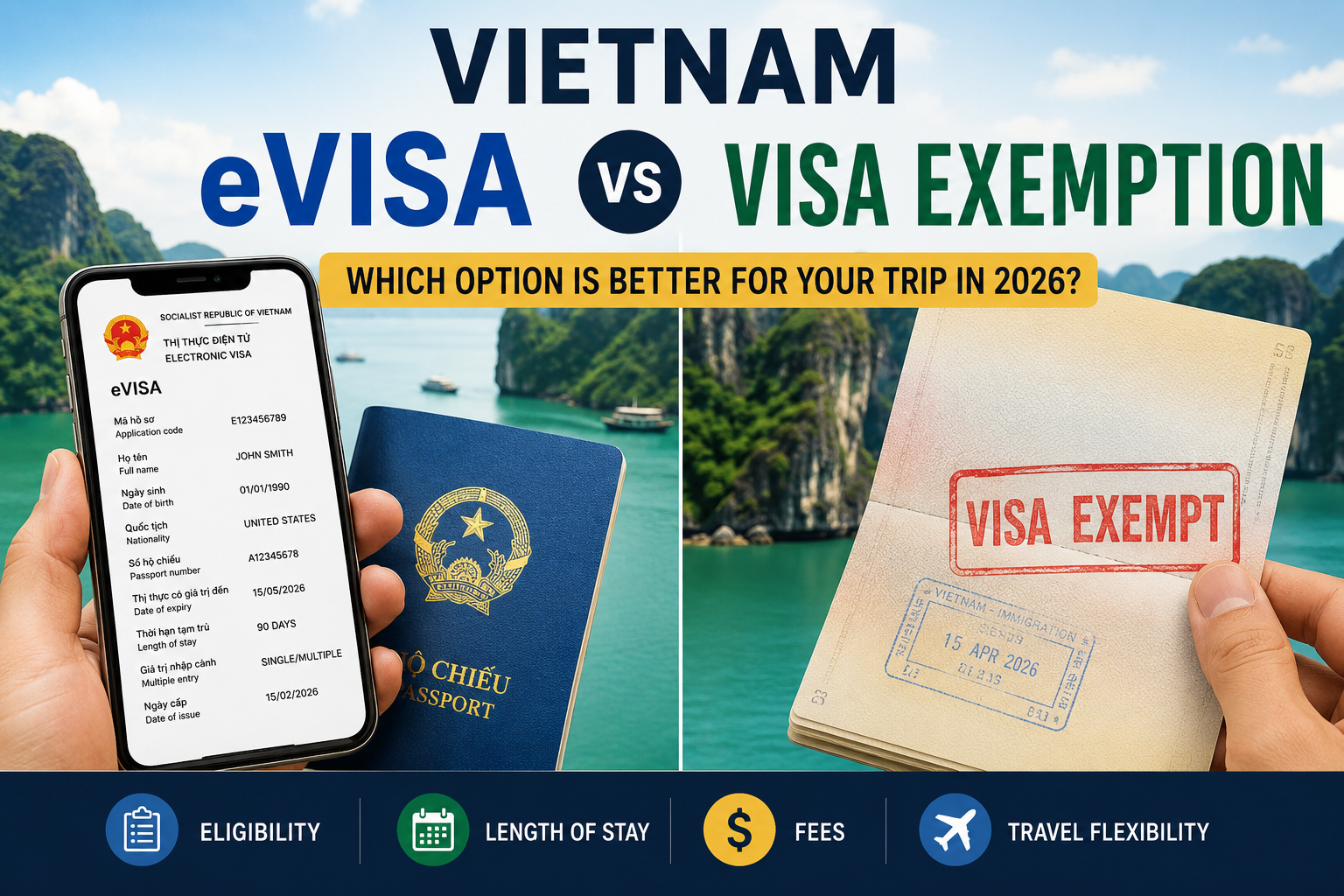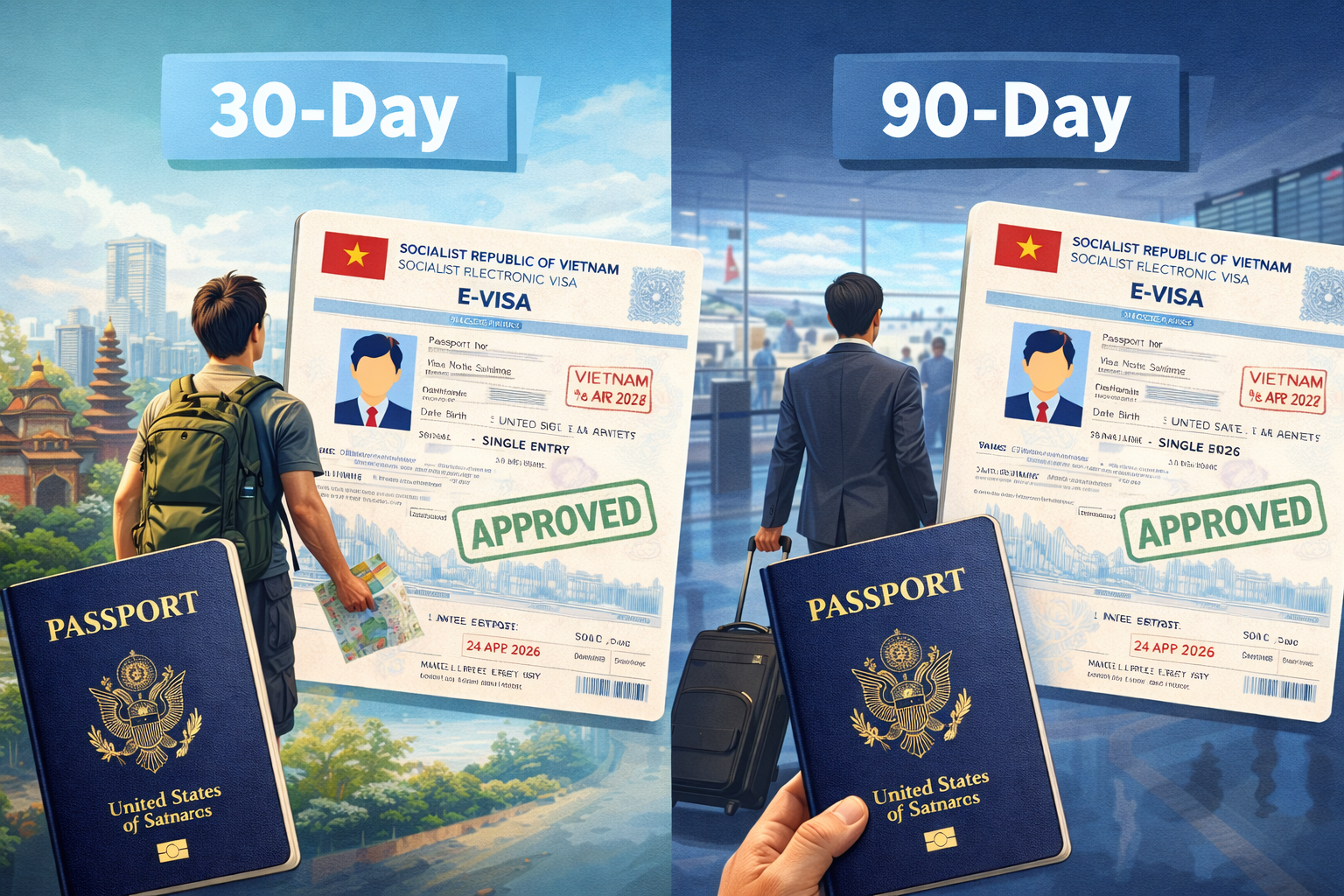
Vietnam has simplified its visa system by introducing a 90-day eVisa, giving travelers more flexibility than the previous 30-day option. Today, visitors can choose between short-term and longer stays, depending on their travel plans.
But which visa is the better option?
This guide explains the difference between the 30-day and 90-day Vietnam eVisa, who should choose each option, and how to decide which visa fits your travel needs.
The visa system is administered by the Vietnam Immigration Department.
Overview of Vietnam eVisa Options
Vietnam now offers two common eVisa durations for international travelers.
30-Day Vietnam eVisa
– Valid for 30 days
– Usually single entry
– Suitable for short holidays
– Ideal for travelers visiting only Vietnam
90-Day Vietnam eVisa
– Valid for up to 90 days
– Available as single-entry or multiple-entry
– Suitable for long stays or regional travel
– Popular among digital nomads and business travelers
The introduction of the 90-day visa made Vietnam much more attractive for travelers exploring Southeast Asia.
Key Differences Between 30-Day and 90-Day eVisa
| Feature | 30-Day eVisa | 90-Day eVisa |
|---|---|---|
| Visa validity | 30 days | Up to 90 days |
| Entry type | Usually single entry | Single or multiple entry |
| Best for | Short vacation | Long trips or business |
| Flexibility | Limited | High |
Travelers planning to visit nearby countries and return to Vietnam often prefer the 90-day multi-entry option.
When Should You Choose a 30-Day Visa?
The 30-day eVisa is perfect for travelers who are visiting Vietnam for a short holiday.
Typical situations include:
– A 1–2 week vacation
– A short cultural tour
– Visiting major cities like
+ Ho Chi Minh City
+ Hanoi
+ Da Nang
If your itinerary is simple and you do not plan to leave and re-enter Vietnam, the 30-day visa is usually sufficient.
When Should You Choose a 90-Day Visa?
The 90-day eVisa is the better option for travelers who need flexibility.
It is recommended if you:
– Plan to stay more than one month
– Want to travel across multiple Southeast Asian countries
– Expect business trips or meetings
– Want the option to re-enter Vietnam
Many travelers use land borders such as Moc Bai Border Gate to visit Cambodia before returning to Vietnam later.
Entry Points for eVisa Holders
Travelers with either visa type can enter Vietnam through approved checkpoints, including major airports such as:
– Tan Son Nhat International Airport
– Noi Bai International Airport
– Da Nang International Airport
These airports handle the majority of international arrivals into Vietnam.
Which Visa Do Most Travelers Choose?
Since the introduction of the 90-day eVisa, many travelers prefer it because it offers:
✔ More travel flexibility
✔ Multiple-entry options
✔ Longer stay without reapplying
Even if travelers plan to stay only a few weeks, the 90-day visa gives them the freedom to change travel plans.
Tips Before Applying for a Vietnam eVisa
Before submitting your visa application, check the following:
✔ Passport validity (minimum 6 months)
✔ Correct passport photo format
✔ Entry port matches travel plans
✔ Personal information matches passport exactly
Small mistakes can delay visa approval.
Final Thoughts
Both the 30-day and 90-day Vietnam eVisa are convenient options for international travelers. The best choice depends on how long you plan to stay and whether you need multiple entries.
For short vacations, the 30-day visa is usually enough.
For longer trips or regional travel, the 90-day multi-entry visa provides far greater flexibility. Understanding these options helps travelers choose the visa that best fits their travel plans in Vietnam.
Need help with Vietnam eVisa services?
Contact us via WhatsApp or Zalo: +84 919 185 990 or +84 909 450 430 for quick assistance.